Espressif Developer Portal

“Welcome to the Espressif Systems Developer Portal—your official hub for all good things, such as the ESP32 and more. Explore our extensive collection of articles, workshops, and tutorials to enhance your development journey with the latest tools and insights.”

Featured Articles#


Gesture Recognition Based on TFLite

Gesture Recognition Based on TFLite

·11 mins
This article demonstrates how to implement gesture recognition using TensorFlow Lite Micro on Espressif SoCs. It covers the complete workflow from data collection and model training to model deployment, showcasing TensorFlow Lite Micro’s applications in edge AI.


More Articles

Workshop Highlights
#

Dive into our latest workshops and master the skills you need to maximize the power of the ESP32.

ESP-IDF Workshop: Advanced

ESP-IDF Workshop: Advanced

··4 mins
This workshop covers the advanced features of ESP-IDF and focuses on modular development, the event loop, core dumps, size analysis, and flash encryption.

More Workshops

Upcoming Events
#

RustWeek 2026

RustWeek 2026

Meet Espressif at RustWeek 2026 in Utrecht! Join us for a week of Rust talks, workshops, and community alongside the Rust Project’s All-Hands.

More Events

Recent

Building FOFOCA: An Open-Source AI Robot with ESP32, ESP32-C3, and Edge AI

Building FOFOCA: An Open-Source AI Robot with ESP32, ESP32-C3, and Edge AI

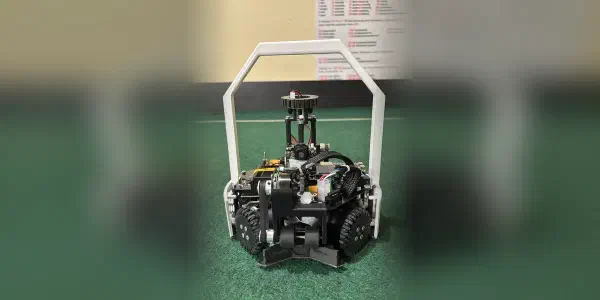
FOFOCA is an open-source reference design for an AI-governed household robot, built around a Raspberry Pi 5 brain, an ESP32 for real-time motor control and sensor polling, and an ESP32-C3 driving an OLED status display over MQTT. This article walks through the hardware architecture, the firmware running on each Espressif chip, and how all of it connects to a local edge AI server running NVIDIA Nemotron Nano 8B for inference — no cloud dependency required.
Inside the New ESP-Brookesia v0.7 Architecture

Inside the New ESP-Brookesia v0.7 Architecture

··8 mins
This article introduces the redesigned ESP-Brookesia v0.7 architecture, from Utils, HAL, and General Service to AI Agent and AI Expression. It explains how these modules fit together and highlights two examples that help you quickly understand how to build AIoT interaction products on top of the framework.
Developing a Rust-based IoT device with AI

Developing a Rust-based IoT device with AI

·13 mins
AI assistants are most effective on ESP32 Rust firmware when you supply clear specs, pinned crates, reference implementations (often ESP-IDF C), and a tight verify loop. The article discusses good practices, pitfalls, discipline, and entropy. A brief explanation about the device is also included, along with the repository and all artifacts.