In this blog we will introduce how combining the Espressif RED-DA compliance framework along with the ESP ZeroCode platform can help accelerate your product development
Tired of juggling complex command-line arguments with endless idf.py flags? ESP-IDF v6.0 introduces a new feature, letting you switch between multiple build configuration. Learn how to structure your project, isolate sdkconfig files, and migrate from ad-hoc commands to clean, declarative builds.
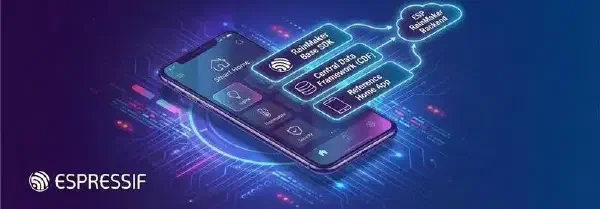
Espressif announces the ESP RainMaker Phone App Development Kit, a comprehensive cross-platform toolkit combining a TypeScript SDK, Central Data Framework (CDF), and React Native reference app. This production-ready kit enables developers to rapidly build branded mobile applications with customisable UI and workflows, whilst leveraging Espressif’s robust RainMaker cloud infrastructure for device management and secure communication.
ESP32-C2 has 256 KB of physical RAM, but with default configurations, only 24 KB remains free in typical Wi-Fi + BLE scenarios. This article explores comprehensive memory optimization strategies that can free up over 100 KB of RAM, making complex applications viable on this cost-effective chip.
This article follows up on the article ‘Porting a library to an ESP-IDF component’ and shows some advanced tips and tricks when porting larger libraries into ESP-IDF components.
This guide demonstrates how to integrate external libraries into NuttX applications using static libraries and cross-compilation. Learn how to build a library on x86, integrate it into the NuttX simulation environment, and cross-compile for RISC-V targets like the ESP32-C6, all without moving your entire codebase into the NuttX directory structure.
Learn how Wokwi simulation and AI-assisted debugging solved a subtle RGB565 color mapping bug when porting Raylib to ESP32, turning hours of hardware debugging into an efficient iterative workflow with automated visual testing.
This article shows how to port an external library into an ESP-IDF project by converting it into a reusable component. Using tinyexpr as an example, it covers obtaining the source code, creating a new project, building a component, configuring the build system, and testing on hardware.
Learn how to extend idf.py with custom commands for your development workflow. This guide covers both component-based extensions for project-specific tools and Python package extensions for reusable commands, with practical examples and best practices for seamless integration.
This article explains how ESP-IDF brings object-oriented programming principles into C by using structs, opaque pointers, and handles to enforce encapsulation and modularity. It shows how components like HTTP servers and I²C buses are managed through handles that represent distinct objects for configuration and operation, and compares this approach to Python and C++.
Learn how to set up the ESP32 Arduino Core development environment, including Arduino IDE installation and ESP32 board package setup using both the Board Manager and manual Git installation methods.
This article shows how ESP-IDF’s logging system uses tags and verbosity levels to produce structured, configurable output, helping you keep code clean and debug more effectively.
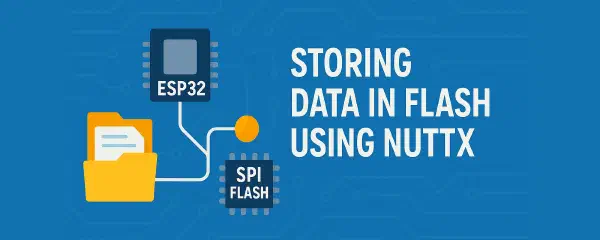
This guide explores how to utilize flash memory for persistent data storage in NuttX-based embedded systems, covering SPI Flash fundamentals, file system options (SmartFS, SPIFFS, LittleFS), and practical implementation of a boot time logging application with Wi-Fi and NTP synchronization.
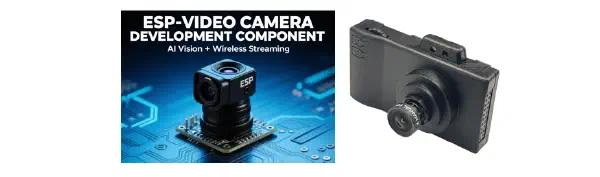
The esp-video component provides a solution to build camera applications on the ESP32 chips. This article will introduce the esp-video component, how to use it, and will give an overview of the framework around it.
The ESP_NEW_JPEG library from Espressif enables efficient JPEG encoding and decoding on embedded devices. This article introduces the main features of ESP_NEW_JPEG – including image rotation, clipping, scaling, and block mode – and shares key usage tips for developers.
As security expectations rise globally - driven by region-specific cybersecurity regulations - safeguarding device credentials has become critical for IoT manufacturers. This article explains how the ESP-TEE framework integrates with Matter and demonstrates building secure products using the Espressif RISC-V SoCs, showcasing hardware-enforced security that can resist scalable remote software attacks.
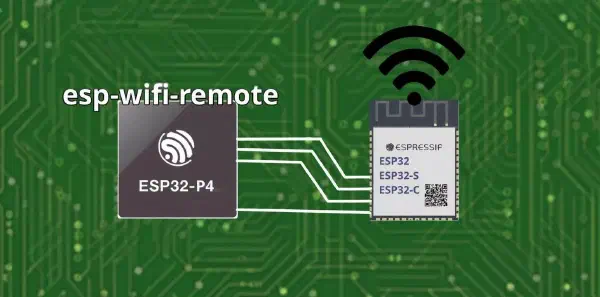
This blog post introduces the esp-wifi-remote component, which extends Wi-Fi functionality to ESP32 chips that lack native Wi-Fi support. We will explore the esp-wifi-remote ecosystem, its components, architecture, and integration with esp-hosted.
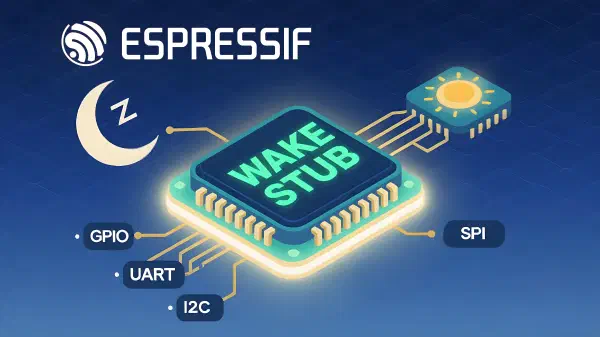
In this article, we first explain the principles behind the Deep-sleep wake stub application and then demonstrate how to implement GPIO, UART, I2C, and SPI within it.
Espressif’s ESP_IMAGE_EFFECTS component is a powerful image processing library that can do common image processing operations such as scaling, rotation, cropping, and color space conversion. This article introduces the library, shows how to use it in processing images, and provides usage examples.
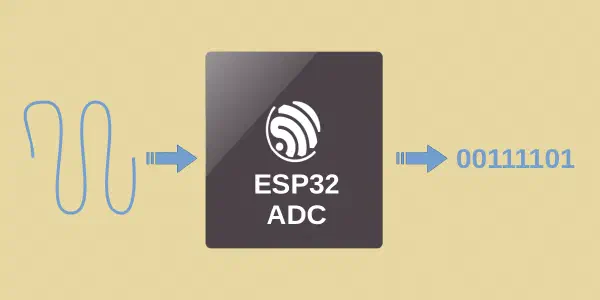
This article compares the Analog-to-Digital Converter (ADC) performance of different Espressif SoCs and shows the techniques to improve the ADC accuracy using software calibration. The results should help developers choose the most suitable SoC and optimize it for their application’s accuracy and voltage range requirements.
This article explains error handling in FreeRTOS-based embedded systems, highlighting common C practices and their limitations. It introduces ESP-IDF’s esp_err_t type and error-checking macros, demonstrating how they help manage errors systematically. It shows practical ways to implement error handling in embedded applications.
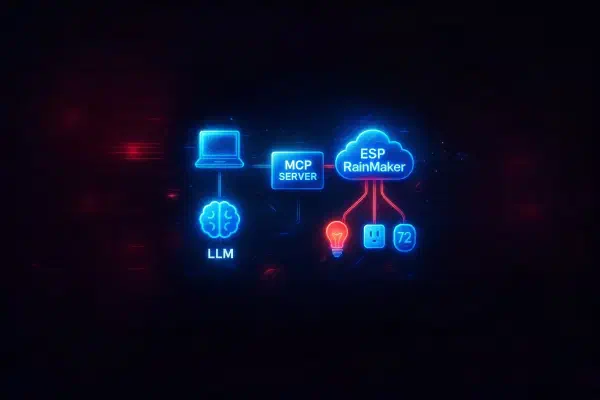
ESP RainMaker now supports the Model Context Protocol (MCP), enabling natural language interactions with your IoT devices via tools like Claude, Cursor, Gemini CLI, Windsurf, etc. This blog introduces the new stdio-based MCP server, outlines use cases, and hints at what’s next.
This article introduces Espressif’s esp_h264 component, a lightweight H.264 codec optimized for embedded devices. It shows how to leverage hardware acceleration, implement efficient video processing, and optimize performance for various applications.
Fast and secure device restoration during boot-up is critical for real-time IoT applications like smart lighting. In this article, we explore how to reduce boot-up delays by restoring device state early, directly from the ESP-IDF bootloader.
Espressif is streamlining RED Delegated Act (RED-DA) compliance by providing pre-certified firmware platforms, documentation templates, and partner support to help developers meet the upcoming EN 18031 standard. With flexible pathways including self-declaration and third-party assessments, developers can accelerate EU market readiness for Aug 2025 and beyond.
This article introduces Espressif’s new Centralized Documentation Platform (CDP) — a unified site for all technical documentation, featuring enhanced search, integrated chatbot support, and improved feedback tools.
This article extends the NuttX motor control system with inertial measurement unit (IMU) sensor integration for vibration measurement and wireless data streaming capabilities using the ESP32-C6 Wi-Fi connectivity.
This article explores the features and capabilities of ESP-Audio-Effects, a powerful audio processing library from Espressif. It introduces core function such as ALC, Equalizer, Mixer, Sonic, DRC, and more, and demonstrates how they integrate into the GMF (General Multimedia Framework) pipeline. With support for flexible configuration, interleaved and deinterleaved formats, and a unified API style, this library empowers developers to build robust and customizable audio processing applications.