Espressif is streamlining RED Delegated Act (RED-DA) compliance by providing pre-certified firmware platforms, documentation templates, and partner support to help developers meet the upcoming EN 18031 standard. With flexible pathways including self-declaration and third-party assessments, developers can accelerate EU market readiness for Aug 2025 and beyond.
This article introduces Espressif’s new Centralized Documentation Platform (CDP) — a unified site for all technical documentation, featuring enhanced search, integrated chatbot support, and improved feedback tools.
This article extends the NuttX motor control system with inertial measurement unit (IMU) sensor integration for vibration measurement and wireless data streaming capabilities using the ESP32-C6 Wi-Fi connectivity.
This article explores the features and capabilities of ESP-Audio-Effects, a powerful audio processing library from Espressif. It introduces core function such as ALC, Equalizer, Mixer, Sonic, DRC, and more, and demonstrates how they integrate into the GMF (General Multimedia Framework) pipeline. With support for flexible configuration, interleaved and deinterleaved formats, and a unified API style, this library empowers developers to build robust and customizable audio processing applications.
In this article, we explore a simplified ESP32 boot process using single-image binaries to speed up build and flash times — ideal for development workflows. This approach sacrifices features like OTA updates but enables faster iteration.
This article shows how to create a simple HTTP server. It explains the functions you need and the setup required. After reading this, you should be able to create your own HTTP server on Espressif devices.
This article demonstrates how to implement a touchpad-based digit recognition system using ESP-DL on ESP32 series chips. It covers the complete workflow from data collection and preprocessing to model training, quantization, and deployment, showcasing ESP-DL’s capabilities in edge AI applications.
This two-part guide shows how to set up VS Code with the ESP-IDF extension to debug Espressif boards using JTAG. In this second part, we will debug a simple project using gdb through Espressif’s VSCode extension. We will explore the debugging options for navigating the code and inspecting the variables.
Mosquitto – the industry-standard MQTT broker – has been ported to ESP-IDF. Its lightweight version retains Mosquitto’s core functionality and security features to run on resource-constrained IoT devices. This MQTT broker is ideal for edge computing, testing, and standalone IoT deployments. In this article, we will do an overview and show you how to get started.
Espressif has launched the ESP32-C5, the first RISC-V SoC with dual-band Wi-Fi 6, Bluetooth 5 (LE), and IEEE 802.15.4 support. Designed for low-latency wireless applications, it features a 240 MHz CPU, LP-CPU, and rich peripheral options. Backed by ESP-IDF, the ESP32-C5 is now in mass production and ready for developers.
This two-part guide shows how to set up VS Code with the ESP-IDF extension to debug Espressif boards using JTAG. This first part covers the debugging process, hardware setup and connections, and starting the openOCD server.
This article demonstrates how to implement motor control and speed sensing on an ESP32-C6 using NuttX RTOS. It covers setting up MCPWM for motor control, ADC for potentiometer reading, and quadrature encoder for speed measurement. The implementation showcases NuttX’s real-time capabilities through a practical example using common peripherals and sensors.
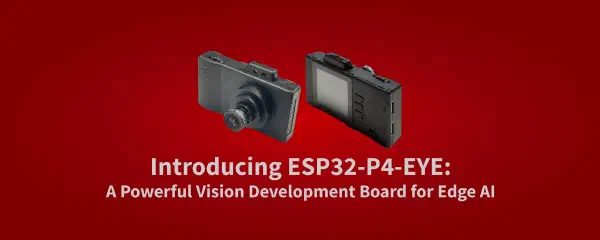
Discover the ESP32-P4 EYE DevKit — a compact, camera-focused development board designed for real-time image processing and edge computing. Learn how this powerful, low-cost solution can accelerate your next smart camera or IoT project.
This article explores ESP FOURCC standard based on FOURCC (Four Character Code), a standardized 32-bit identifier used in multimedia for format consistency, reducing conversion overhead and debugging complexity. It highlights Espressif implementation in ESP-GMF, where esp_fourcc.h defines FOURCC values for video, audio, container, image, and pixel formats, optimizing efficiency in embedded systems.
This tutorial guides you through setting up a soft-AP using an Espressif module and ESP-IDF. It covers the process of creating a project, configuring Wi-Fi, and handling connection events through event loops. Upon completion, you’ll be able to establish a soft-AP and manage Wi-Fi connections. It is the first step to building more advanced networking applications.
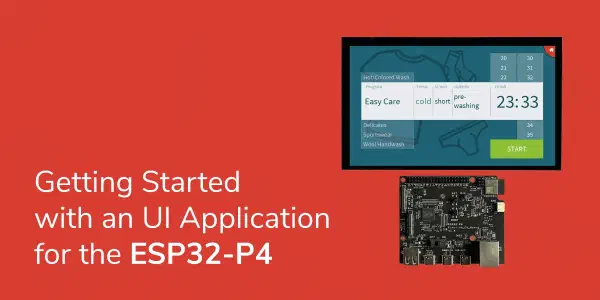
Complete tutorial for building Embedded Wizard UI applications on ESP32-P4-Function-EV-Board with ESP-IDF V5.5.1, featuring Master Demo and example projects.
This guide helps manufacturers of wireless-enabled products based on Espressif modules understand the RED DA (EN 18031) cybersecurity requirements, identify their product’s category, and determine the right path to certification before launching in the EU market.
In this article, we’ll start with a quick overview of Ultra Low Power coprocessors (ULPs) in Espressif chips and how they can significantly reduce power consumption in your applications. Then, we’ll walk through a tutorial on how to use ULPs in practice!
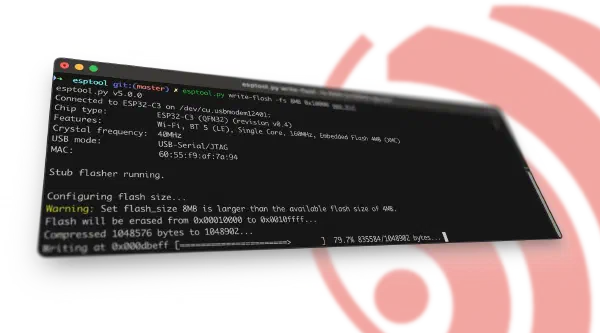
esptool v5, currently under development by Espressif, boosts its new public API and customizable logging capabilities for developers. The new version brings enhancements for users as well. Contributions are welcome, preview out now.
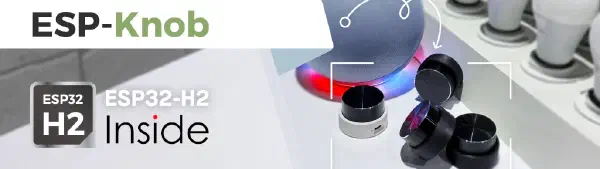
This article provides an overview of the ESP-Knob, its features, and functionality. It also details the hardware design and outlines the firmware framework that supports its operation.
This article provides a high level overview of the security architecture of the ESP RainMaker IoT platform, covering all aspects like device hardware and network security, client network security, authentication and access control, user-device mapping, cloud data security and certifications.