Esp32 C6
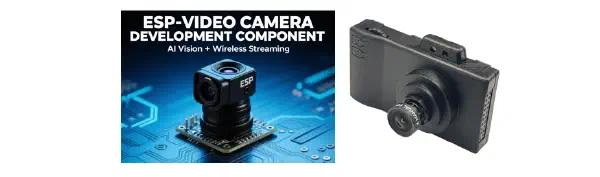
Building Smarter Camera Applications with esp-video
The esp-video component provides a solution to build camera applications on the ESP32 chips. This article will introduce the esp-video component, how to use it, and will give an overview of the framework around it.

Building Hardware-Enforced Trust into Matter Devices with ESP-TEE
As security expectations rise globally - driven by region-specific cybersecurity regulations - safeguarding device credentials has become critical for IoT manufacturers. This article explains how the ESP-TEE framework integrates with Matter and demonstrates building secure products using the Espressif RISC-V SoCs, showcasing hardware-enforced security that can resist scalable remote software attacks.
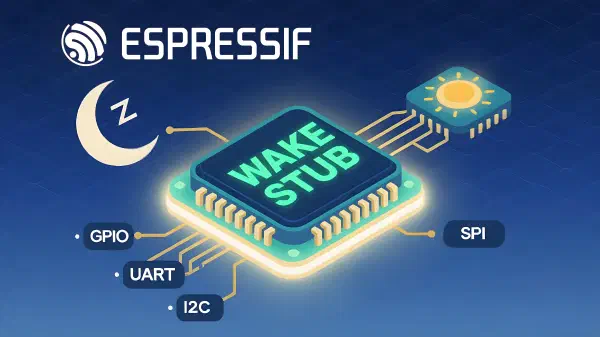
Implementing a Deep-sleep wake stub application on Espressif chips to enable power-efficient IoT devices
·19 mins
In this article, we first explain the principles behind the Deep-sleep wake stub application and then demonstrate how to implement GPIO, UART, I2C, and SPI within it.
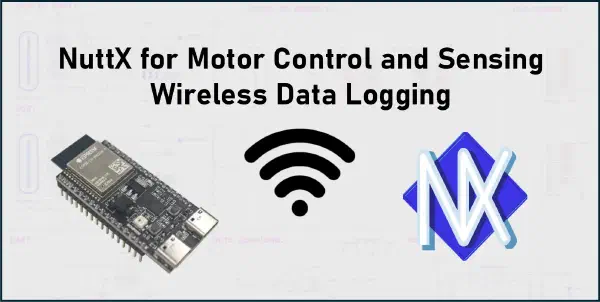
NuttX for Motor Control and Sensing: IMU Integration and Wireless Data Streaming
This article extends the NuttX motor control system with inertial measurement unit (IMU) sensor integration for vibration measurement and wireless data streaming capabilities using the ESP32-C6 Wi-Fi connectivity.
NuttX for Motor Control and Sensing: MCPWM and DC Motor Control
This article demonstrates how to implement motor control and speed sensing on an ESP32-C6 using NuttX RTOS. It covers setting up MCPWM for motor control, ADC for potentiometer reading, and quadrature encoder for speed measurement. The implementation showcases NuttX’s real-time capabilities through a practical example using common peripherals and sensors.
Building low power applications on Espressif chips: Ultra-Low-Power (ULP) coprocessor
In this article, we’ll start with a quick overview of Ultra Low Power coprocessors (ULPs) in Espressif chips and how they can significantly reduce power consumption in your applications. Then, we’ll walk through a tutorial on how to use ULPs in practice!