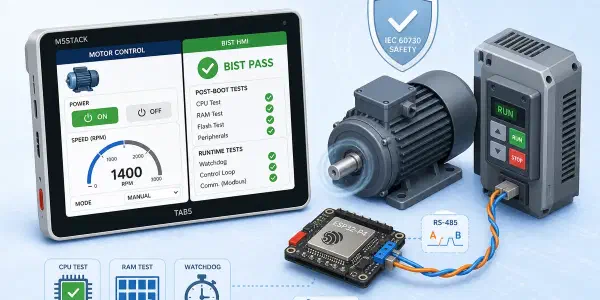
ESP-BIST brings IEC 60730 Class B self-test coverage to Espressif SoCs, and this article walks through what that actually means before putting it to work. Using an ESP32-P4-based M5Stack Tab5 as a Modbus HMI for a simulated motor controller, we show how a SoC that can prove its own health is a chip you can trust to draw a “safe” screen without lying about it.
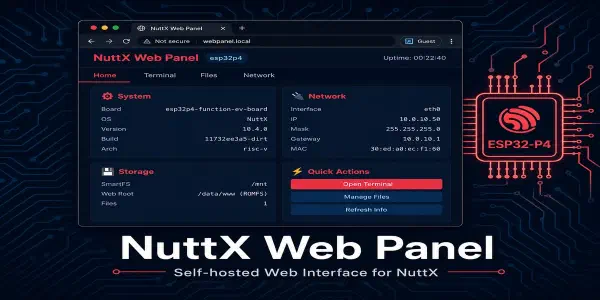
NuttX Web Panel is a self-hosted web interface for NuttX that provides system information, a browser-based NSH terminal, and file management. Combined with Python, it turns NuttX into a computing platform where interpreted applications can be developed and tested without recompiling code.
AES67/RAVENNA is the audio transport behind a lot of broadcast and live-sound infrastructure, and it normally runs on dedicated silicon or Linux boxes. This article is about getting a working, PTP-synchronized AES67 endpoint onto an ESP32-P4 — how the clock sync, the low-latency receive path, and the I2S playout fit together, what the measured latency is, and where the edges are.
A set of ESP-IDF components that run the Rust smoltcp stack as the IPv4/IPv6 data plane, while keeping esp_http_server, esp-tls and esp-mqtt working without source changes. This article explains the linker –wrap shim that makes it compatible, the single-task poll architecture, the throughput I measured on an ESP32-P4 (91.15 Mbit/s on a 100 Mbit link), and the limitations to be aware of.
This article describes the Matter camera features introduced in Matter 1.5 and discusses camera support for the ESP32 series of SoCs using Espressif Matter SDK
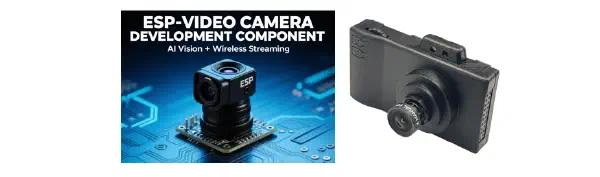
The esp-video component provides a solution to build camera applications on the ESP32 chips. This article will introduce the esp-video component, how to use it, and will give an overview of the framework around it.
This article introduces Espressif’s esp_h264 component, a lightweight H.264 codec optimized for embedded devices. It shows how to leverage hardware acceleration, implement efficient video processing, and optimize performance for various applications.
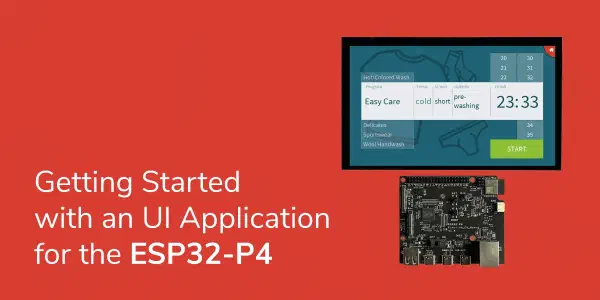
Complete tutorial for building Embedded Wizard UI applications on ESP32-P4-Function-EV-Board with ESP-IDF V5.5.1, featuring Master Demo and example projects.