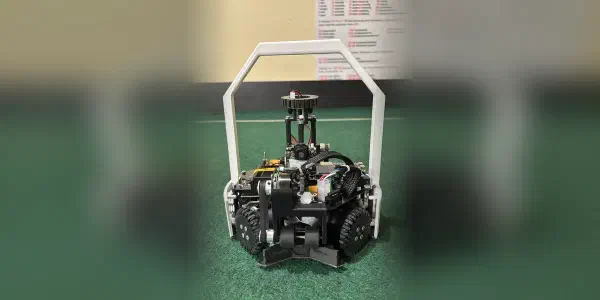
Team XLC – WYLDFYRE built two autonomous soccer robots around the ESP32-S3 and finished 11th of 24 at RoboCup Junior 2026 in Incheon. This article covers why we moved from an Arduino Mega to the ESP32-S3, how we read 48 analog line sensors through three multiplexers, how the whole robot runs from a millis-based scheduler inside loop(), and how ESP-NOW let two identical robots swap attacker and defender roles mid-match. It also covers what it cost us to use almost every usable pin on the chip, and the gate driver that destroyed several boards before we understood it.
Learn how to build edge AI vision applications on the ESP32-S3-EYE using ESP-WHO and ESP-DL. This hands-on workshop covers face detection, face recognition, hand gesture recognition, and object detection with real-time inference on the device.
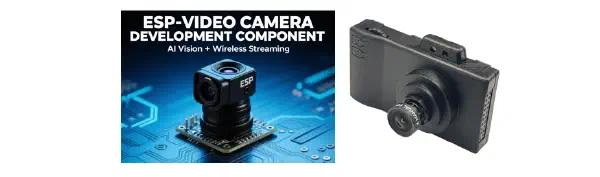
The esp-video component provides a solution to build camera applications on the ESP32 chips. This article will introduce the esp-video component, how to use it, and will give an overview of the framework around it.
The ESP_NEW_JPEG library from Espressif enables efficient JPEG encoding and decoding on embedded devices. This article introduces the main features of ESP_NEW_JPEG – including image rotation, clipping, scaling, and block mode – and shares key usage tips for developers.
This article introduces Espressif’s esp_h264 component, a lightweight H.264 codec optimized for embedded devices. It shows how to leverage hardware acceleration, implement efficient video processing, and optimize performance for various applications.
This two-part guide shows how to set up VS Code with the ESP-IDF extension to debug Espressif boards using JTAG. In this second part, we will debug a simple project using gdb through Espressif’s VSCode extension. We will explore the debugging options for navigating the code and inspecting the variables.
This two-part guide shows how to set up VS Code with the ESP-IDF extension to debug Espressif boards using JTAG. This first part covers the debugging process, hardware setup and connections, and starting the openOCD server.
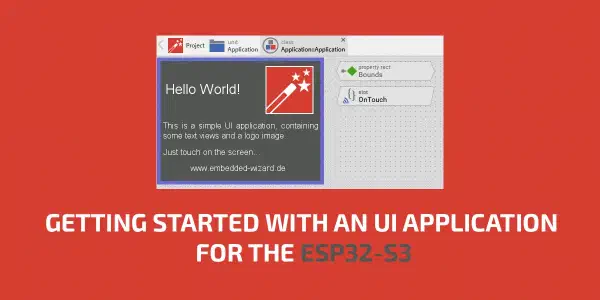
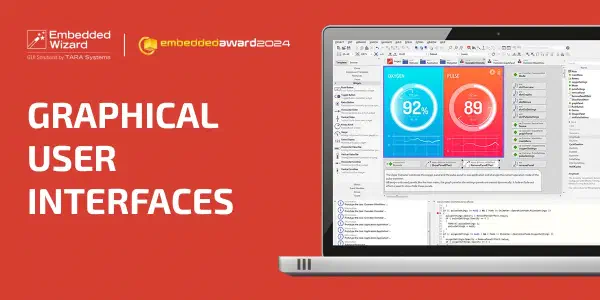
Learn how Embedded Wizard 15 with AI-assisted development and Figma integration helps you create stunning, responsive GUIs for ESP32-S2 and ESP32-S3 microcontrollers.