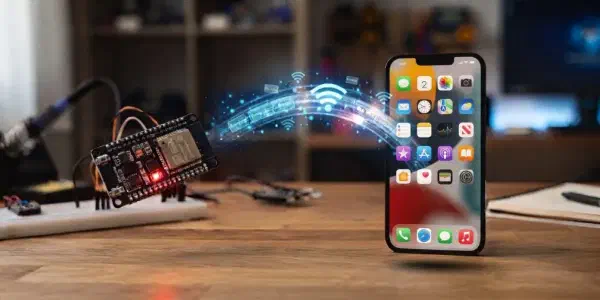
iOS 26 brings Wi-Fi Aware™ support on iPhone 12 and later, enabling compatible devices to securely discover, pair, and communicate directly. This requires no Access Point and does not affect iPhone’s network connectivity over Wi-Fi. This article walks through the steps to set up an ESP device and an iPhone so they can pair and connect using Wi-Fi Aware.
Still on improving our AI-based, embedded software workflow, this article applies the same AI-agent discipline to Zephyr. Using the same ESP Dualkey kit from M5Stack, specs, integration rules, plan→execute→commit→test, reusable modules, journals, and Git - without redefining the product.
AI assistants are most effective on ESP32 Rust firmware when you supply clear specs, pinned crates, reference implementations (often ESP-IDF C), and a tight verify loop. The article discusses good practices, pitfalls, discipline, and entropy. A brief explanation about the device is also included, along with the repository and all artifacts.
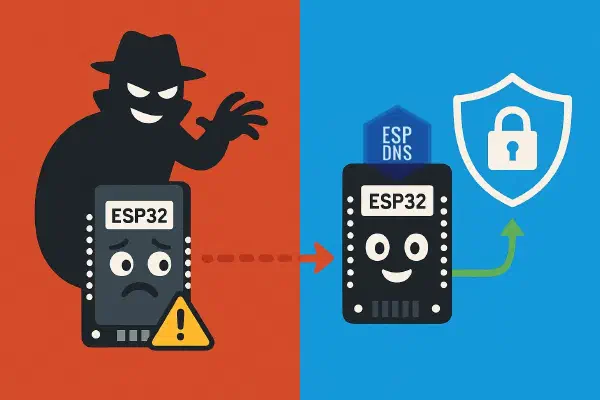
This article introduces the ESP DNS component and explains why securing DNS resolution is essential for ESP32-based IoT devices. It shows how DNS over TLS (DoT) and DNS over HTTPS (DoH) can be enabled transparently in ESP-IDF with minimal code changes, using standard DNS APIs. Practical examples and guidance help developers choose the right protocol while balancing security, performance, and resource constraints.
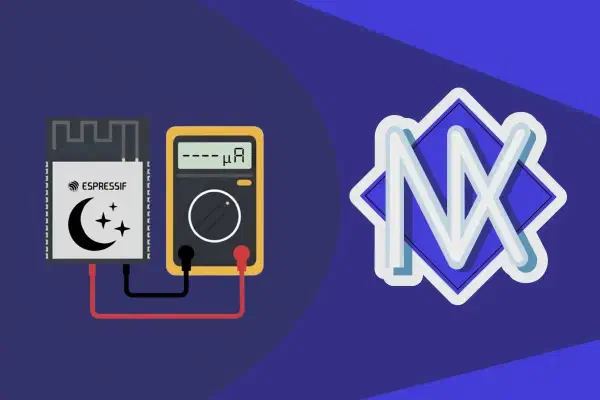
This article walks through Espressif power modes and NuttX power states, then explains how they map to each other. Then it introduces NuttX’s power management system and the concept of governors. The how-to part shows how to control sleep modes from the shell and a custom application. Finally, you will see real power‑consumption measurements across multiple ESP chips to illustrate the practical impact using power states.
ESP32-C2 has 256 KB of physical RAM, but with default configurations, only 24 KB remains free in typical Wi-Fi + BLE scenarios. This article explores comprehensive memory optimization strategies that can free up over 100 KB of RAM, making complex applications viable on this cost-effective chip.
This guide demonstrates how to integrate external libraries into NuttX applications using static libraries and cross-compilation. Learn how to build a library on x86, integrate it into the NuttX simulation environment, and cross-compile for RISC-V targets like the ESP32-C6, all without moving your entire codebase into the NuttX directory structure.