esparagus is an ESP32-family flasher written in Rust — a behavioral port of esptool’s protocol, sync, reset, and stub-loader paths, wrapped in an observability layer built for programs rather than humans: NDJSON events, a machine-readable report file, stable exit codes, and an expect-style serial monitor with built-in crash detection. This article explains why that layer exists, how the flash-test-fix feedback loop works, and the three ways to integrate it — direct CLI, an Agent Skill, and an MCP server.
ESP-IDF v6.0 introduces the Tools local MCP server, a feature that lets AI clients like Cursor and Claude Code control your projects – setting targets, building, flashing, and checking status. This article explains how it works and walks you through setup step by step.
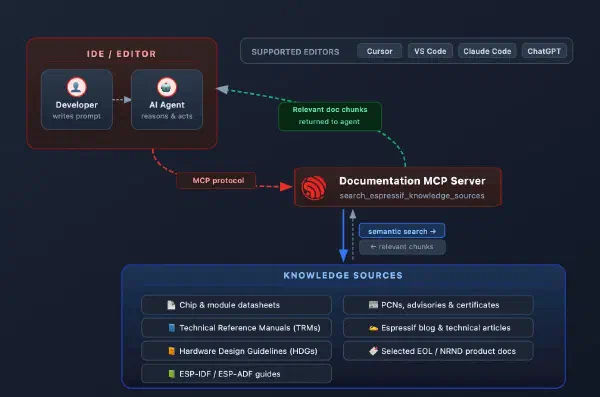
This article introduces how to connect your AI agent to official, up-to-date Espressif documentation directly inside your AI applications — with installation steps, example prompts, and best practices.
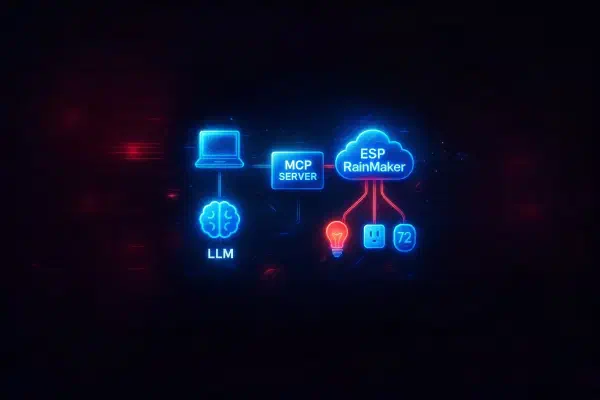
ESP RainMaker now supports the Model Context Protocol (MCP), enabling natural language interactions with your IoT devices via tools like Claude, Cursor, Gemini CLI, Windsurf, etc. This blog introduces the new stdio-based MCP server, outlines use cases, and hints at what’s next.