AES67/RAVENNA is the audio transport behind a lot of broadcast and live-sound infrastructure, and it normally runs on dedicated silicon or Linux boxes. This article is about getting a working, PTP-synchronized AES67 endpoint onto an ESP32-P4 — how the clock sync, the low-latency receive path, and the I2S playout fit together, what the measured latency is, and where the edges are.
A set of ESP-IDF components that run the Rust smoltcp stack as the IPv4/IPv6 data plane, while keeping esp_http_server, esp-tls and esp-mqtt working without source changes. This article explains the linker –wrap shim that makes it compatible, the single-task poll architecture, the throughput I measured on an ESP32-P4 (91.15 Mbit/s on a 100 Mbit link), and the limitations to be aware of.
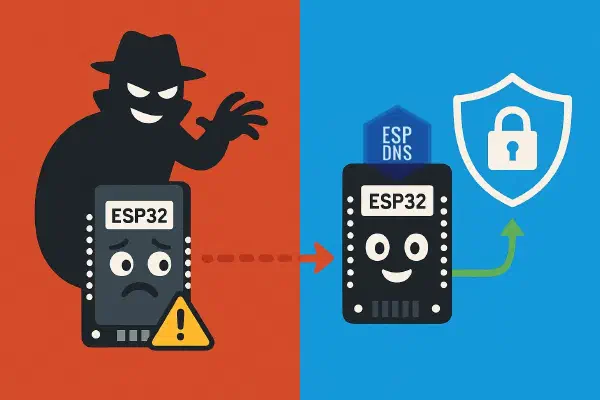
This article introduces the ESP DNS component and explains why securing DNS resolution is essential for ESP32-based IoT devices. It shows how DNS over TLS (DoT) and DNS over HTTPS (DoH) can be enabled transparently in ESP-IDF with minimal code changes, using standard DNS APIs. Practical examples and guidance help developers choose the right protocol while balancing security, performance, and resource constraints.