Learn how to use the ESP-IDF button component to handle GPIO buttons with event detection, debouncing, and callbacks. A step-by-step guide with practical code examples.
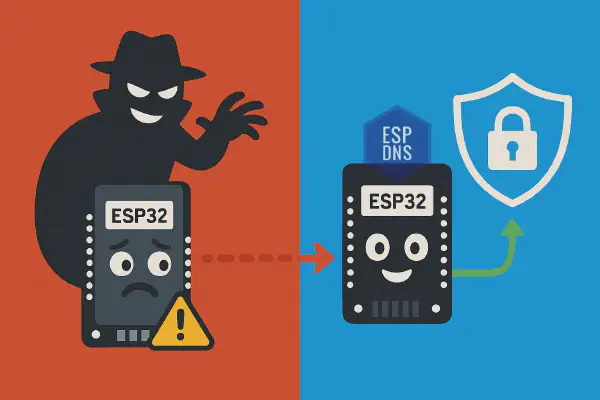
This article introduces the ESP DNS component and explains why securing DNS resolution is essential for ESP32-based IoT devices. It shows how DNS over TLS (DoT) and DNS over HTTPS (DoH) can be enabled transparently in ESP-IDF with minimal code changes, using standard DNS APIs. Practical examples and guidance help developers choose the right protocol while balancing security, performance, and resource constraints.
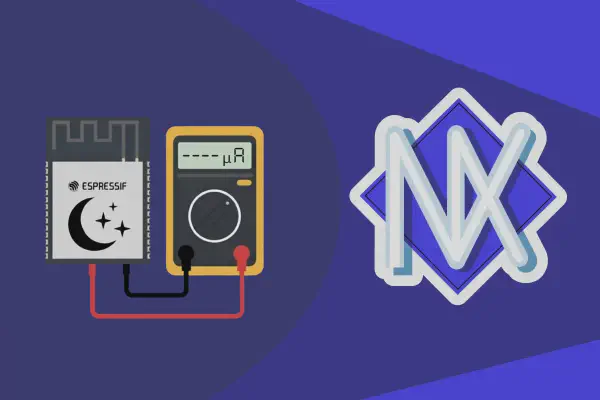
This article walks through Espressif power modes and NuttX power states, then explains how they map to each other. Then it introduces NuttX’s power management system and the concept of governors. The how-to part shows how to control sleep modes from the shell and a custom application. Finally, you will see real power‑consumption measurements across multiple ESP chips to illustrate the practical impact using power states.
This article explains what are the default values in the ESP-IDF configuration and how they are managed in the configuration system in the upcoming ESP-IDF v6. The purpose and behavior of default values are described. This article also explains what is a conflict in default values and how to resolve it with the “idf.py refresh-config” command.
ESP32-C2 has 256 KB of physical RAM, but with default configurations, only 24 KB remains free in typical Wi-Fi + BLE scenarios. This article explores comprehensive memory optimization strategies that can free up over 100 KB of RAM, making complex applications viable on this cost-effective chip.
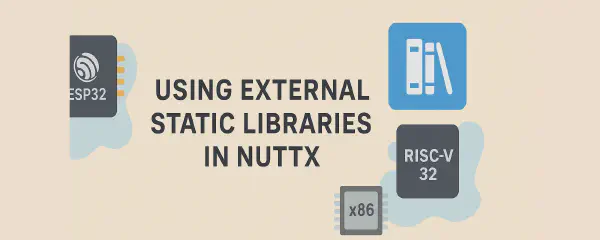
This guide demonstrates how to integrate external libraries into NuttX applications using static libraries and cross-compilation. Learn how to build a library on x86, integrate it into the NuttX simulation environment, and cross-compile for RISC-V targets like the ESP32-C6, all without moving your entire codebase into the NuttX directory structure.
Learn how Wokwi simulation and AI-assisted debugging solved a subtle RGB565 color mapping bug when porting Raylib to ESP32, turning hours of hardware debugging into an efficient iterative workflow with automated visual testing.
This article shows how to create a simple HTTP server. It explains the functions you need and the setup required. After reading this, you should be able to create your own HTTP server on Espressif devices.