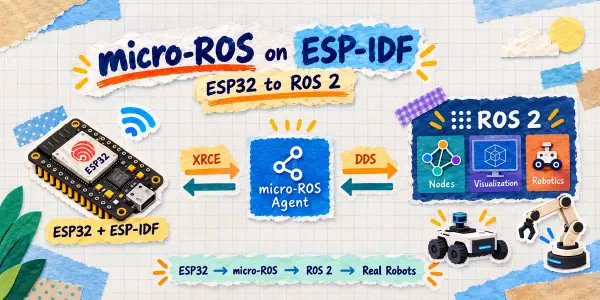
micro-ROS brings ROS 2 capabilities to microcontrollers. This article shows how to use the micro-ROS component for ESP-IDF to exchange messages over Wi-Fi and integrate a device into a ROS 2 system.
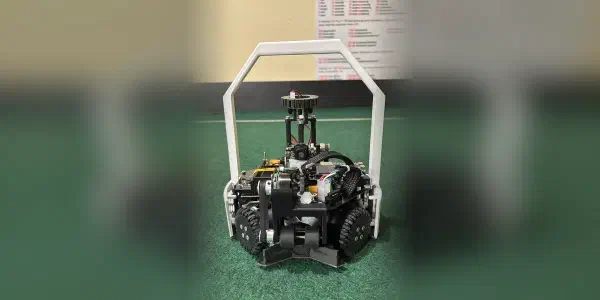
Team XLC – WYLDFYRE built two autonomous soccer robots around the ESP32-S3 and finished 11th of 24 at RoboCup Junior 2026 in Incheon. This article covers why we moved from an Arduino Mega to the ESP32-S3, how we read 48 analog line sensors through three multiplexers, how the whole robot runs from a millis-based scheduler inside loop(), and how ESP-NOW let two identical robots swap attacker and defender roles mid-match. It also covers what it cost us to use almost every usable pin on the chip, and the gate driver that destroyed several boards before we understood it.
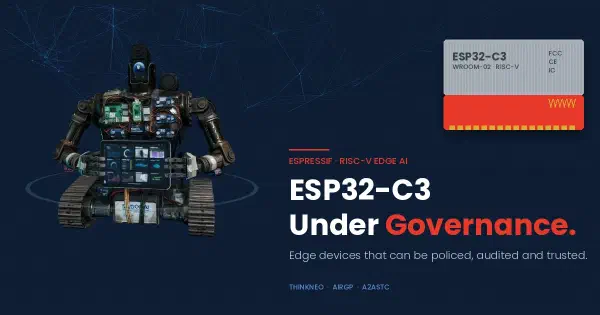
FOFOCA is an open-source reference design for an AI-governed household robot, built around a Raspberry Pi 5 brain, an ESP32 for real-time motor control and sensor polling, and an ESP32-C3 driving an OLED status display over MQTT. This article walks through the hardware architecture, the firmware running on each Espressif chip, and how all of it connects to a local edge AI server running NVIDIA Nemotron Nano 8B for inference — no cloud dependency required.